
Last updated October 16, 2026
Insulation Permits, Codes & Inspections in CA: What You Need to Know
California is one of the few states where adding insulation to your own attic can legally require a building permit, not because of physical safety risk, but because Title 24 energy compliance is verified at permit close. Unpermitted insulation work has a way of surfacing years later, usually when you’re sitting at a title company desk trying to sell your house. In Fresno, where summer attic temperatures routinely push past 140°F and winters drop below freezing on clear nights, the code story gets even more specific. This guide covers exactly when a permit is required, what an inspector actually checks, how unpermitted work shows up in disclosure paperwork, and what Fresno homeowners need to know before anyone climbs into the attic. For Insulation Warning Signs: A Fresno Homeowner’s Reference Guide, see our companion resource.
Quick Answer
Insulation work in California requires a building permit when it’s part of new construction, a major remodel that triggers a square footage or structural review, or when HVAC equipment is being replaced or relocated and the ductwork must meet new Title 24 Part 6 requirements. Replacing or adding attic insulation as a standalone project is generally exempt from permitting in Fresno and most California jurisdictions, but the work must still meet California Energy Code insulation standards of R-30 to R-38 for attics in climate zone 13. If a contractor says a permit is never needed, keep asking questions until you hear the actual conditions.
Table of Contents
- When Is a Permit Required for Insulation in California?
- How Title 24 Part 6 Applies to Attic Insulation Replacement
- The Real Estate Disclosure Problem: How Unpermitted Insulation Shows Up at Closing
- Fresno-Specific Requirements: City of Fresno vs. Fresno County
- How to Get Permit Responsibility in Writing Before Work Starts
- What the Inspector Actually Checks During an Insulation Inspection
- What Insulation Permits and Inspections Cost in California
- Common Mistakes to Avoid
- When to Call a Professional
- Frequently Asked Questions
- The Bottom Line
When Is a Permit Required for Insulation in California?
The short answer: insulation alone rarely triggers a permit. The long answer: the situations where it does trigger one are more common than most homeowners realize, and they share a pattern. A permit is required when the insulation work is part of a larger project that already needs a permit, or when the insulation is part of a system being brought up to current energy code.
Here are the specific threshold conditions under the California Building Code and California Energy Code:
- New construction or additions: Any square footage added to the structure requires a building permit, and the insulation in that addition gets inspected as part of the envelope review. This is non-negotiable and applies in every California jurisdiction.
- HVAC replacement or relocation: When a new furnace, air handler, or ducted heat pump goes in, the ductwork and the attic insulation around it face Title 24 Part 6 verification. In climate zone 13, which includes Fresno, the code wants existing attics brought to R-30 minimum or R-38 preferred when the HVAC system is touched. The insulation portion of the job gets wrapped into the mechanical permit.
- Major remodels that trigger re-roofing: When a re-roof project removes enough decking that the attic is exposed, Fresno inspectors can require insulation to be brought up to current code before closing the roof permit. This catches a lot of homeowners off guard.
- Square footage triggers: Remodels that add conditioned square footage, like finishing a garage or converting a patio into a sunroom, bring the entire thermal envelope under review. The insulation in the new space and often the adjacent attic gets folded into the permit package.
- Change of occupancy or extensive structural repair: Converting a warehouse into a residence, or repairing fire damage that opens wall cavities, means the insulation must be inspected to current code, which includes both the R-value and the installation quality.
What’s exempt? Standalone attic insulation replacement or addition on an existing home with no other work. Blowing in more cellulose or adding fiberglass batts on top of existing material does not require a permit in Fresno or the surrounding county. Removing old insulation and installing new spray foam or batts, same thing: no permit needed on its own. The exemption holds because the insulation is not altering the structure, the electrical system, or the mechanical systems of the house.
The nuance that matters: even when a permit isn’t required, the work is still expected to meet current energy code standards. An inspector won’t come look at your attic, but a good contractor will still install to R-30 or R-38, air-seal the attic floor where it’s exposed, and document what was done. We’ve seen too many Fresno attics where someone in the past blew in R-19, called it good, and left the soffit vents buried, cutting airflow to nothing. That’s not a permit problem; it’s a performance problem. Our Attic Insulation Maintenance Checklist for Fresno Homeowners can help you avoid these issues.
How Title 24 Part 6 Applies to Attic Insulation Replacement
Title 24 Part 6 is the California Energy Code, and most Fresno homeowners have heard of it only when they’ve bought a new house or put in a new air conditioner. Here’s what it actually says about insulation and why it matters even when no permit is on the table.
For climate zone 13, where Fresno sits, the Energy Code sets a mandatory minimum of R-30 for attic insulation in existing homes and R-38 for new construction. For walls, the minimum is R-13 to R-15 depending on framing type. For raised floors over crawl spaces, R-19. These numbers aren’t suggestions. When a permitted project touches the building envelope, the inspector verifies these R-values at the rough inspection and again at final.
What the inspector is actually checking during a Title 24 insulation inspection:
- Installed R-value: The inspector verifies that the material depth matches the claimed R-value. Cellulose at about 3.5 inches per R-10, fiberglass batts at the labeled thickness, or spray foam at the manufacturer’s stated depth. Labels and product data sheets get checked.
- Coverage and gaps: Missing coverage around plumbing penetrations, electrical boxes, and top plates is a red flag. The inspector is checking for thermal bypass, places where heat slips past the insulation entirely.
- Ventilation preservation: In Fresno’s climate, attic ventilation matters heavily in the summer. The inspector checks that soffit vents and ridge vents are not blocked by insulation. Baffles or vent chutes must be in place where insulation could otherwise spill over the soffit area.
- Ductwork condition: When the insulation is part of an HVAC permit, the inspector verifies that ducts in the attic are sealed and insulated to R-8 minimum. Leaky ducts in a 140-degree attic are a massive energy penalty.
- Air sealing: Title 24 increasingly treats air sealing as part of the insulation scope. The inspector looks at whether top plates, wire penetrations, and attic hatches have been sealed with foam or caulk. This can be the difference between a pass and a correction notice.
One point that rarely gets explained to homeowners: Title 24 compliance is verified at permit close, not at installation. If the insulation is sloppy or the R-value is short, the inspector writes a correction. The contractor comes back, fixes it, and schedules a reinspection. Every reinspection costs time and sometimes a fee. That’s why the installation quality matters even when the permit belongs to a bigger project like an HVAC swap. The insulation has to be right for the permit to close, which means the whole project can stall on something as simple as a missing baffle.
Our team at Woolsey Insulation Fresno works with Title 24 inspectors across Fresno County regularly, and in our experience the inspecting jurisdictions have become increasingly diligent about insulation depth documentation in the last few years. A decade ago, an inspector might have poked a head through the attic hatch and said “looks fine.” Today they’re measuring with rulers and checking product labels. The standard has risen, and that’s a good thing for homeowners.
The Real Estate Disclosure Problem: How Unpermitted Insulation Shows Up at Closing
Here’s the scenario most homeowners never anticipate. You own a home in Fresno, maybe in the Tower District or over in Clovis. You added insulation years ago, perhaps when a friend or a handyman offered to “blow in a little extra.” No permit. No inspection. No documentation. You forgot about it. Then you sell the house.
California’s transfer disclosure statement, the TDS, asks sellers to disclose all significant improvements made to the property, including whether permits were obtained. The California Civil Code doesn’t specifically name insulation, but it does ask about structural changes, additions, and work that affects the building envelope. When a buyer’s inspector sees new-looking insulation in the attic and the seller has no record of a permit, a question gets raised. At best, it’s a conversation. At worst, it becomes a contingency, a price reduction, or a demand that the work be permitted retroactively before escrow closes.
What unpermitted insulation work actually costs at closing:
- Buyer requests a retroactive permit: The seller has to open a permit after the fact, pay the permit fee, pay for any corrections the inspector requires, and wait for the jurisdiction to process it. In Fresno, that can add two to four weeks to escrow.
- Price concession: Buyers who don’t want to wait often ask for a credit at closing, typically $2,000 to $5,000 depending on the size of the attic and what the inspector flags.
- Deal failure: Some buyers simply walk. The lender may not care about attic insulation, but the buyer’s inspector, the buyer’s agent, and the buyer’s own comfort with risk all play a role. Unpermitted work reads as a sign of other corners cut.
- Title insurance complications: Standard title insurance doesn’t cover unpermitted work, and if the buyer’s lender discovers the unpermitted insulation during underwriting, the loan can be delayed or denied.
The actual financial exposure is rarely the cost of the insulation itself. It’s the compression at the negotiating table. A seller who discloses unpermitted work early, with documentation of what was installed and to what R-value, has a much easier conversation than one who hears about it from the buyer’s inspector three weeks into escrow.
If you’re a Fresno homeowner wondering whether your existing insulation has a permit trail, the fastest check is the City of Fresno’s online permit portal or the Fresno County permit lookup for unincorporated parcels. If nothing shows up and you’re planning to sell in the next few years, it’s worth getting the work documented now, whether through a retroactive permit or at minimum a written installation record from a licensed contractor.
Fresno-Specific Requirements: City of Fresno vs. Fresno County
Fresno isn’t one jurisdiction. It’s a city with a building department, surrounded by unincorporated county land governed by Fresno County’s building division. The two don’t always treat insulation the same way, and the differences are worth knowing before you start a project.
City of Fresno: The city’s building department follows the California Building Code and Energy Code directly. Standalone attic insulation does not require a permit. Insulation tied to an HVAC change-out, an addition, or a re-roof with decking replacement gets inspected as part of that permit. City inspectors in Fresno are generally thorough on Title 24 items, especially air sealing and attic ventilation. If you’re in a historic district, like parts of the Tower District or Huntington Boulevard, additional review may apply to exterior changes, though attic insulation itself stays exempt.
Fresno County (unincorporated parcels): The county also exempts standalone insulation, but the practical difference is enforcement discretion. County inspectors cover a huge area, from the Bluffs to the rural reaches near Sanger and Kerman. When insulation is part of a permitted project, the county tends to be less stringent on some air-sealing details but more strict on visible R-value documentation. If you’re on a county parcel with an older home, the basement or crawl space insulation requirements can vary depending on whether the home has a raised floor.
The one Fresno-specific item we always flag: heat. Climate zone 13 means the energy code assumes a cooling-dominated climate, which is why seasonal insulation care for Fresno homeowners should include checking attic ventilation regularly. The ventilation requirements in Fresno attics are not optional paperwork. A sealed attic with no airflow becomes a solar oven, and the heat that builds up in a 140-degree attic doesn’t just cost you energy; it bakes shingles from below and shortens roof life. When insulation work happens under permit in Fresno, the inspector is explicitly checking that insulation didn’t choke off the attic’s ventilation system. We see failed inspections for blocked soffit vents more than for any other single item.
If you’re in Clovis, the situation is similar to the City of Fresno: standalone insulation is exempt, but Clovis defers to Fresno County for some inspection services depending on the project type. The safest approach for any Fresno-area homeowner is to ask the specific jurisdiction before work starts, or to work with an insulation contractor who deals with local inspectors every week.
How to Get Permit Responsibility in Writing Before Work Starts
Most homeowners don’t know how to ask the permit question, so they don’t ask. Then the work gets done, and the conversation after the fact is always worse. Here’s the script we recommend using with any insulation contractor in Fresno or anywhere else in California.
The key question: “Who is responsible for determining whether a permit is required, and will you put that determination in writing?”
A contractor who hesitates, says “we’ll figure it out as we go,” or suggests the homeowner should “just handle it” is telling you something about how they run jobs. A contractor who answers immediately, gives you the code section, and writes it into the estimate is operating a different kind of business.
What to ask, step by step:
- Is a permit required for this specific scope of work? Get a yes or no, and ask for the code section that applies. California Building Code and Title 24 sections are specific enough that a professional should be able to cite the basis for their answer.
- If a permit is required, who pulls it? In California, the contractor typically pulls the permit under their license. If the contractor asks the homeowner to pull it, that’s a red flag; it often means the contractor’s license or insurance isn’t current.
- Will you provide a written scope of work that includes the permit determination? If the answer is no, get another estimate. The written scope is what you’ll show a buyer, a title company, or an inspector if questions come up later.
- What documentation will I receive when the work is complete? You want a written record of what was installed, the R-value, the brand of material, and the installation date. At Woolsey Insulation Fresno, every job gets a written guarantee and a project record precisely for this reason.
- If the work fails inspection, who pays for the reinspection and the corrections? The answer should be immediate and it should be “we do.” The Kingswell way of working is built around this: a written price before any work begins, and accountability after the work is done, in writing.
One more thing worth asking: whether the contractor will be doing the air sealing at the same time. In our experience across Fresno attics, insulation without air sealing leaves a lot of performance on the table. The two go together, and under Title 24, a permitted project that touches the attic will often require at least some air sealing. A contractor who proposes insulation without mentioning air sealing may not be thinking about how the attic actually performs.
What the Inspector Actually Checks During an Insulation Inspection
If your insulation work is part of a permitted project, here’s what happens when the inspector arrives. Knowing this ahead of time makes the whole process less intimidating and helps you understand what good installation looks like.
The inspection sequence for a typical attic insulation project tied to an HVAC permit or addition in Fresno:
- Verification of materials: The inspector checks that the material on site matches what was listed on the permit application. If the plan calls for R-38 blown-in fiberglass from Owens Corning, that’s what they expect to see, not a different product substituted quietly.
- Depth or thickness check: For blown-in insulation, the inspector measures depth at several points across the attic. For batts, they check that the stated R-value matches the product label and that the batts fill the joist cavities without compression. For spray foam, they verify the cured thickness against the manufacturer’s data sheet.
- Coverage review: The inspector looks for bare spots, especially over exterior walls, around plumbing stacks, and at the attic perimeter. A common correction item is missing insulation over the top plates of exterior walls, where the joist bays meet the roofline.
- Ventilation check: Baffles at every soffit vent, clear path from soffit to ridge or gable vents. Blocked ventilation is a correction, and it’s the correction we see most often in Fresno attics with existing ventilation systems.
- Air sealing verification: Where the project scope includes air sealing, the inspector checks that penetrations are sealed: wire holes, plumbing vents, flue chases, and the attic hatch weatherstripping.
- Duct inspection (when applicable): If the permit covers HVAC work, the inspector verifies duct R-value (R-8 minimum), duct sealing, and that ducts in the attic aren’t crushed or disconnected.
Most insulation inspections in Fresno take 20 to 40 minutes and involve the inspector in the attic with a flashlight, a ruler, and a camera. Failed inspections are almost never about the material itself. They’re about installation shortcuts: insufficient depth, blocked vents, missing baffles, uncovered top plates. The fix is usually straightforward, but a failed first inspection means a delay, sometimes a reinspection fee, and a contractor who has to come back on their own time.
When we install attic insulation in Fresno, we schedule the work so that the attic is inspection-ready the first time: depth checks done before the inspector arrives, baffles installed, air sealing complete, and material labels retained. The Kingswell guarantee is built on the idea that the job should pass inspection the first time, because a reinspection is a failure of process, not just compliance.
What Insulation Permits and Inspections Cost in California
Permit fees for insulation work vary by jurisdiction, but here’s the pattern in Fresno and the surrounding Central Valley. The permit fee itself is usually the smallest line item in the whole project. The cost of the work, and the cost of fixing work that doesn’t pass inspection, is where the real money lives.
Typical cost ranges for Fresno-area insulation projects, including permit fees when applicable:
- Standalone attic insulation (no permit required): $1,500 to $3,500 for a typical 1,500-square-foot Fresno ranch home, depending on R-value target and material choice. Blown-in cellulose from GreenFiber runs on the lower end; spray foam runs higher.
- Insulation tied to an HVAC permit: Add $200 to $600 in city or county permit fees, plus the insulation work itself, typically $1,000 to $2,500 depending on current attic condition.
- Insulation tied to an addition or ADU: Permit fees for the overall project run $1,500 to $5,000 in Fresno, with insulation being one inspected line item. The insulation work itself is often $2,000 to $6,000 depending on square footage and ceiling details.
- Retroactive permit for unpermitted work: In Fresno, expect $400 to $1,500 in permit fees plus any correction work the inspector requires. This is the expensive way to handle a permit, which is why doing it right the first time matters.
The material cost difference between R-30 and R-38 blown-in insulation is usually under $500 for a typical attic. That’s the cheapest insurance a homeowner can buy against buyer objections at sale, summer cooling costs, and winter comfort. If you’re paying for an attic insulation job anyway, stepping up to the higher R-value at the time of installation is almost always the right call. Most attic insulation jobs in Fresno run between $1,500 and $3,500 for the typical single-family home; we give you the exact written number before any work starts, and that number doesn’t change at the door.
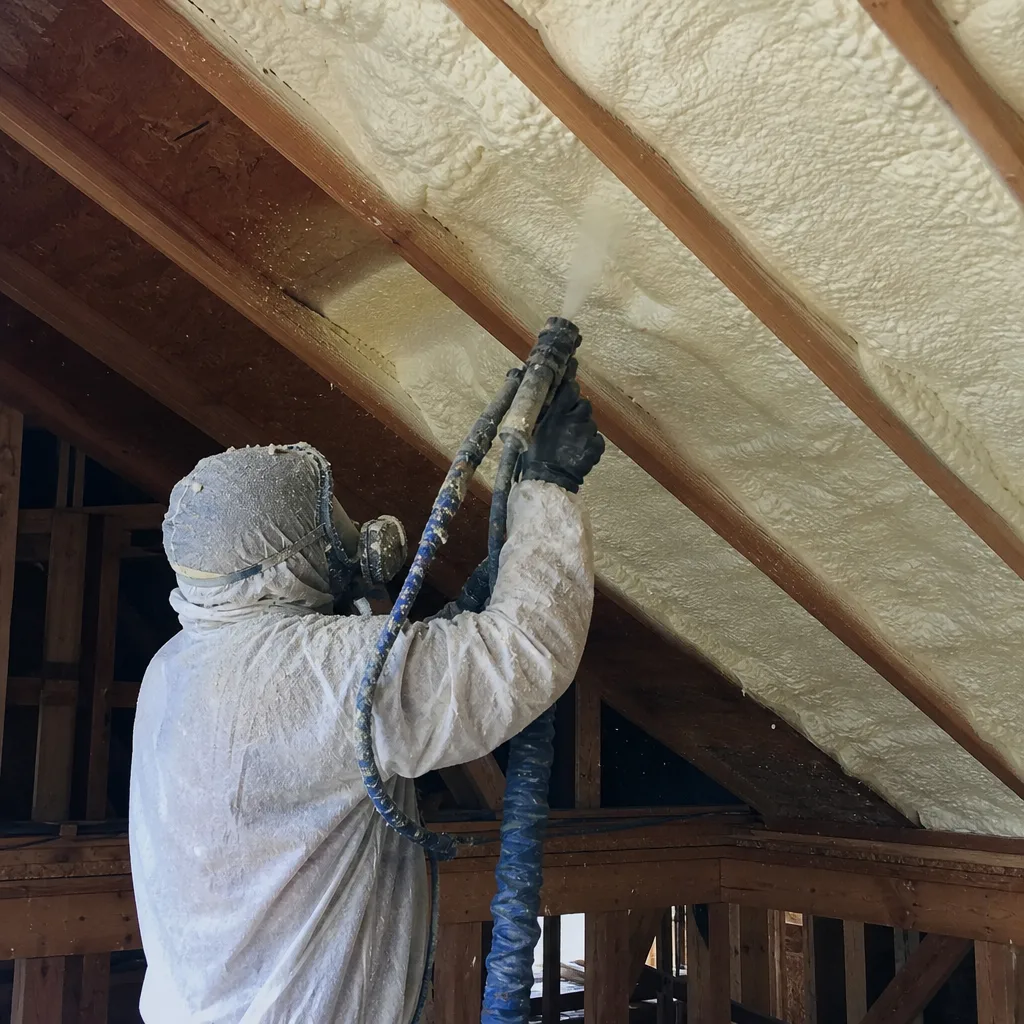
If you’re looking at spray foam insulation, a two-part liquid that expands on contact and seals gaps airtight, the price range is higher, typically $3,000 to $8,000 for a Fresno attic depending on whether you’re doing the roofline or the attic floor. Spray foam gets into the Title 24 conversation more often because its airtightness changes the ventilation calculation, which is exactly the kind of detail that requires a contractor who has worked with local inspectors.
Common Mistakes to Avoid
- Assuming permits are never needed. The most common mistake in Fresno attics is treating every insulation job as permit-exempt. When insulation is part of an HVAC swap, an addition, or a major remodel, it’s part of the permit, and pretending otherwise creates the disclosure problem described above.
- Blocking soffit vents with new insulation. Blowing insulation over the vents turns a Fresno attic into a sealed furnace. This is the number one failed Title 24 inspection item we see, and it also shortens shingle life by trapping heat against the roof deck.
- Installing below code minimums to save money. R-19 in a Fresno attic is better than nothing, but it’s below the R-30 minimum for climate zone 13. The energy savings difference between R-19 and R-38 in a Central Valley summer is substantial, and the buyer’s inspector will flag it at sale.
- Not documenting the work. No permit, no invoice, no material receipts, no R-value statement. When the house sells, the seller has no answer to a buyer’s question. Documentation costs nothing and prevents closing-table conversations.
- Hiring a contractor who won’t put the permit determination in writing. A verbal “you don’t need a permit” is worth nothing in a real estate disclosure. Written scope documents are the standard professionals use, and the absence of one is a signal.
- Skipping air sealing. Insulation slows heat transfer. Air sealing stops conditioned air from leaking into the attic. In Fresno’s climate, doing one without the other leaves real performance on the table, and Title 24 inspectors increasingly expect both.
- Waiting until sale to think about permits. The retrofit permit is always more expensive, slower, and more stressful than handling the permit conversation at the time of installation. If you’re planning to sell in the next three to five years, now is the time to get your attic documented.
When to Call a Professional
Some attic work is genuinely doable for a handy homeowner: checking insulation depth, adding a batt in an exposed bay, sealing a visible gap with foam. But the situations below are where a professional matters, not just for quality but for the paperwork trail.
- Your insulation is part of an HVAC replacement, addition, or remodel that requires a permit, and you need the insulation to pass inspection the first time.
- You’re buying or selling a home in Fresno and need documentation that the attic insulation is up to current code.
- Your attic has existing insulation with signs of moisture, rodent activity, or blocked ventilation, and you want the whole system evaluated.
- You’re considering spray foam insulation and need to understand how it changes the attic ventilation calculation under Title 24.
- You want a written price, a written guarantee, and a project record you can show a future buyer.
Woolsey Insulation Fresno offers free estimates in Fresno, and every estimate includes the permit determination in writing. If you’re unsure whether your attic insulation needs a permit or just needs to be done right, call (559) 785-2658 and ask to speak with someone who can walk through your specific situation. No obligation, just a real answer from a real person. Wool was the first insulation. Woolsey keeps the idea in the name.
Frequently Asked Questions
No, standalone attic insulation work is exempt from building permits in California, including in Fresno and Fresno County. For more guides & resources on navigating local requirements, explore our blog. A permit is required when the insulation is part of a larger permitted project such as new construction, an addition, an HVAC replacement, or a major remodel that triggers a Title 24 review. If your insulation work is tied to any of those projects, the permit covering the main scope will include the insulation as an inspected item.
For climate zone 13, which includes Fresno, the California Energy Code requires a minimum of R-30 for existing homes and R-38 for new construction. Wall insulation minimums are R-13 to R-15 depending on framing, and raised floors over crawl spaces require R-19. Call (559) 785-2658 for a precise R-value recommendation for your specific attic and home layout.
Yes. Unpermitted insulation work that was part of a larger project, or that raises questions during a buyer’s inspection, can show up on the transfer disclosure statement and create negotiation pressure at closing. Sellers have been asked to obtain retroactive permits or offer price concessions typically ranging from $2,000 to $5,000. Documenting the work at installation, even when a permit isn’t required, prevents this problem.
Most attic insulation jobs in Fresno run between $1,500 and $3,500 for a typical single-family home, depending on R-value target and material choice. Spray foam insulation runs higher, typically $3,000 to $8,000 for an attic depending on scope. The Kingswell approach is a written price before any work starts, so the number you’re quoted is the number you pay, with no door-step adjustments.
No, the City of Fresno does not require a standalone inspection for attic insulation installed as an exempt project. When insulation is part of a permitted project like an HVAC change-out or an addition, the insulation is inspected as part of the overall permit at the rough and final inspection stages. Fresno County follows the same exemption for unincorporated parcels.
The inspector verifies installed R-value through depth or thickness measurements, checks for complete coverage without gaps, confirms that soffit and ridge ventilation is preserved, reviews air sealing at penetrations, and, when applicable, checks that attic ductwork is sealed and insulated to R-8 minimum. In Fresno’s climate zone 13, blocked ventilation is the most common correction item.
Have a question we didn’t cover here? Call (559) 785-2658 and a live person will answer, 24 hours a day, 7 days a week. That’s not a call center; it’s the way Woolsey has always operated.
The Bottom Line
Insulation permits in California are a narrow topic with wide implications. The standalone attic insulation project is almost always exempt. The insulation that rides along with an HVAC swap, an addition, or a remodel is not, and the Title 24 inspector will check depth, coverage, ventilation, and air sealing before the permit closes. The disclosure risk is real and manageable: document the work, get the permit determination in writing, and install to current code minimums even when no one is watching. In Fresno, with its intense summer heat and its active real estate market, the homeowner who thinks about permits at installation time saves money at sale time. If you want to talk through your specific situation, call Woolsey Insulation Fresno at (559) 785-2658. We’ll give you a straight answer and a written price, and if you’re not ready for insulation yet, that’s fine too. The knowledge is free either way.
Written by Glenn Hartley, Owner at Woolsey Insulation Fresno, serving Fresno since 2002.