
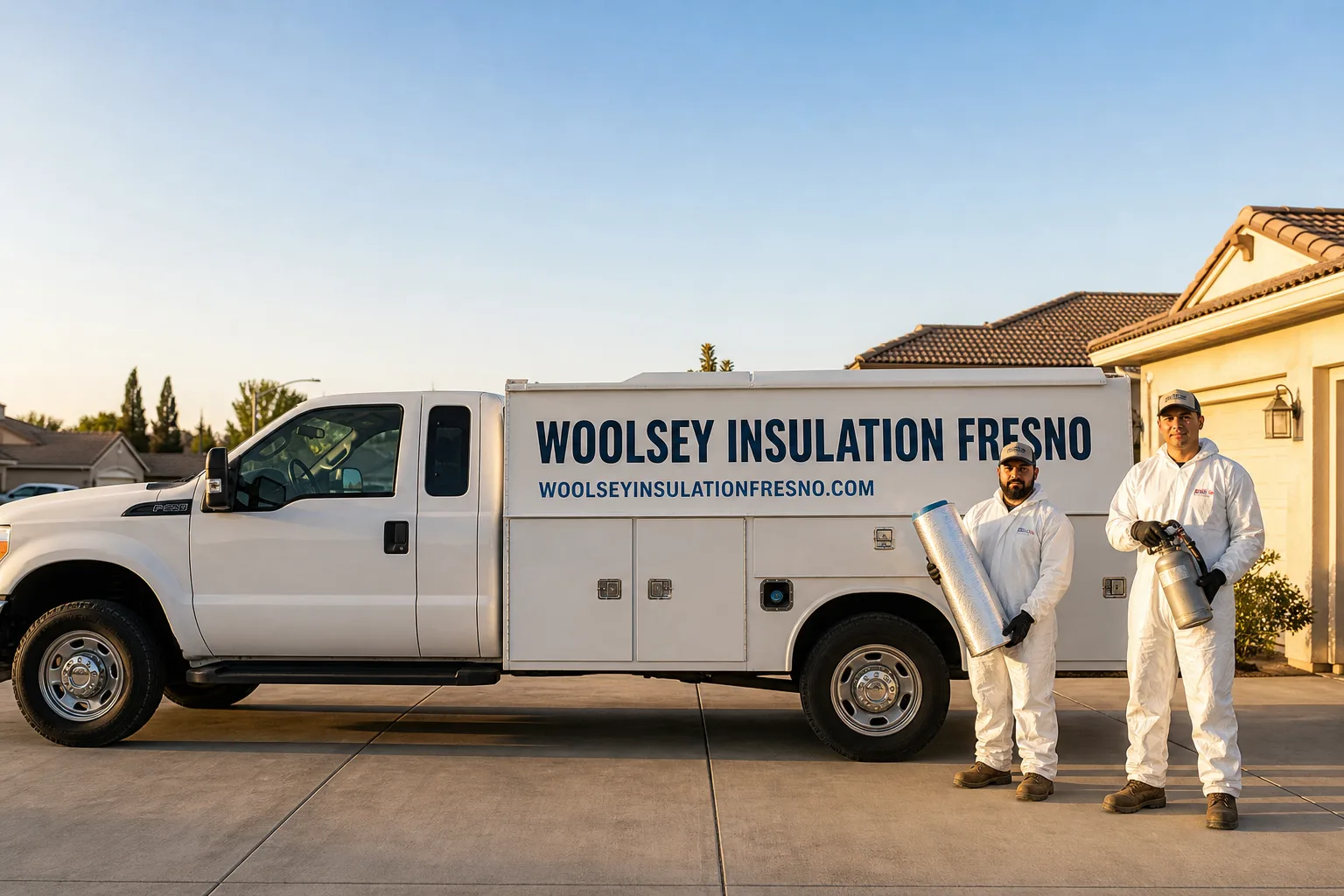
Fast, Reliable Attic Insulation Across Tulare
Attic insulation in Tulare isn’t a luxury upgrade. It’s the difference between a house that stays livable through July and one that turns into an oven by 3 p.m. We work on the older ranch homes that fill Tulare’s east side and the newer subdivisions west of the 99, and we know how heat behaves here. Woolsey Insulation Fresno coordinates dispatch from our Central Valley office, so when you call about a bare ceiling or a bedroom that won’t cool below 85, we can usually have a technician at your door within a day or two. Call (559) 785-2658 and you’ll reach a live person, not a voicemail tree.
Why Woolsey Insulation Fresno Is Tulare’s Preferred Attic Insulation Company
Tulare homeowners have been let down before. We get it. A contractor says one price over the phone, shows up late, and the number changes at the door. That doesn’t happen with us because our process is built around a written price before anyone touches your attic. Glenn Hartley runs our operation, and the standard he set is simple: say the price, show up in the window, leave the job site cleaner than you found it, put the guarantee in writing, and come back if it fails. That’s the Kingswell Guarantee, and it’s included on every job.
We’re not a franchise and we’re not a call center dispatching strangers. Our technicians are background-checked and uniformed, so you know exactly who’s walking through your door on Cherokee Drive or Laspina Street. The phones are answered by a real person 24 hours a day, 7 days a week. That matters when your attic insulation has slumped and you’re waking up to a bedroom that’s already 80 degrees at 8 a.m.
Local knowledge runs deep here. We know that the 1950s-1970s ranch stock in Tulare was built with 2×4 framing and whatever insulation was cheapest at the time, which often meant nothing in the attic at all. We know how the triple-digit summers here degrade old fiberglass. And we know which retrofit approach actually works for these specific homes, not what a sales script says to pitch.
Radiant Barrier in Tulare
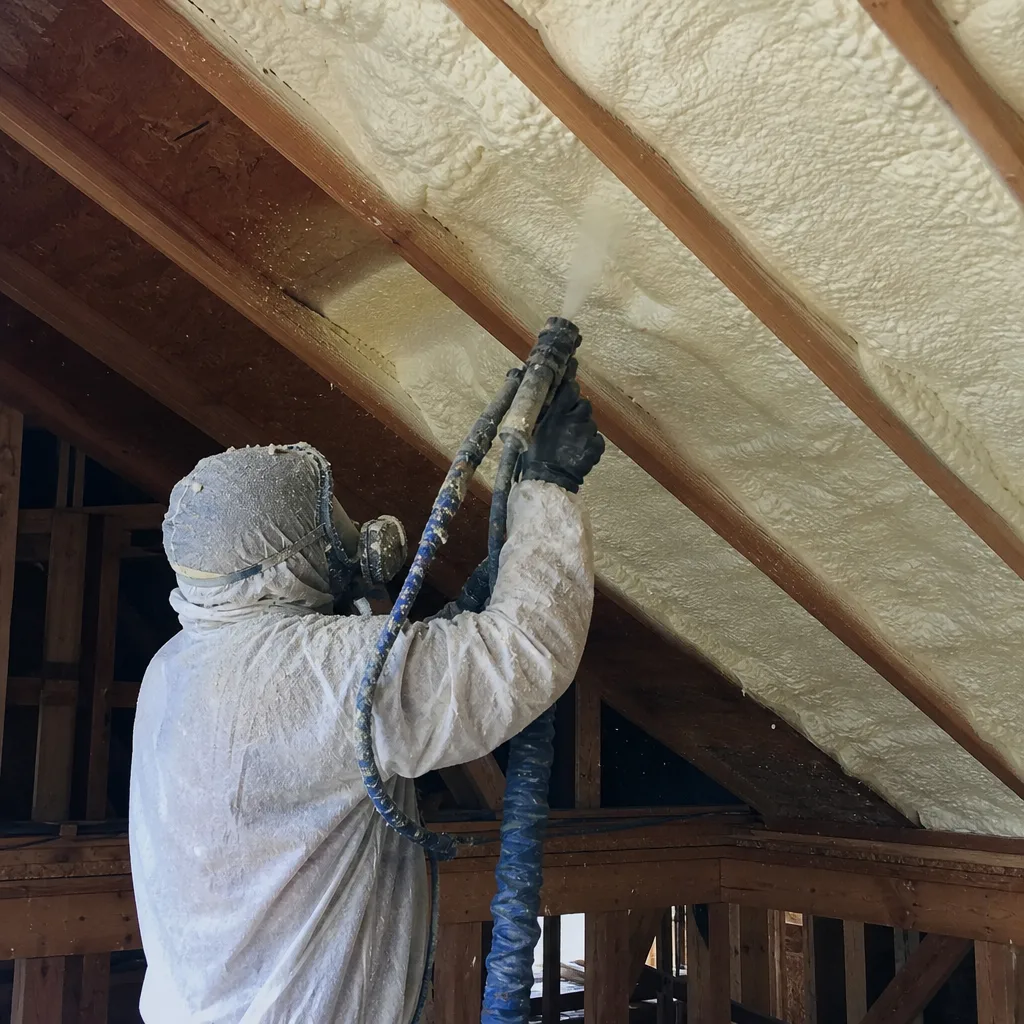
Radiant Barrier in Tulare is one of the most cost-effective upgrades for ranch homes with original shake or composition shingle roofs and no attic ventilation strategy to speak of. It’s a reflective foil layer installed in the attic, typically stapled to the underside of the roof rafters, that bounces radiant heat back out instead of letting it soak into your insulation and radiate down into the living space through the day. In a city where summer highs above 100°F are common and attic temperatures can climb past 140°F, that reflective layer can cut meaningful heat gain before your air conditioner ever has to fight it.
Most radiant barrier installations for a typical 1,200-1,800 square foot Tulare ranch run between $1,200 and $2,800, depending on attic configuration and whether we’re also addressing ventilation at the same time. We’ll give you the exact written number before any work starts, not an estimate that floats.
How Radiant Barrier Works With Existing Insulation
Radiant barrier doesn’t replace your insulation. It works alongside it. On Tulare’s older east-side blocks, we often pair a radiant barrier with a blown-in cellulose top-up, because the two address different heat paths: the barrier stops radiant heat from ever reaching the insulation, and the cellulose slows conductive heat that still gets through. Homes with original single-pane windows and no wall insulation need both layers working together, otherwise the afternoon heat radiates down through the ceiling no matter how much fiberglass is up there.
Dust, Smoke, and Reflectivity
One thing most national insulation guides don’t tell you: agricultural dust and wildfire smoke settle on attic surfaces in Tulare more than in coastal or mountain towns. When that fine particulate settles on a radiant barrier’s reflective face, reflectivity drops. In farm-adjacent neighborhoods near the eastern edge of town, we may recommend a slightly different installation angle or a maintenance check every few years to keep the barrier doing its job. It’s the kind of local detail that only matters in places like Tulare.
Attic Cleaning Services in Tulare
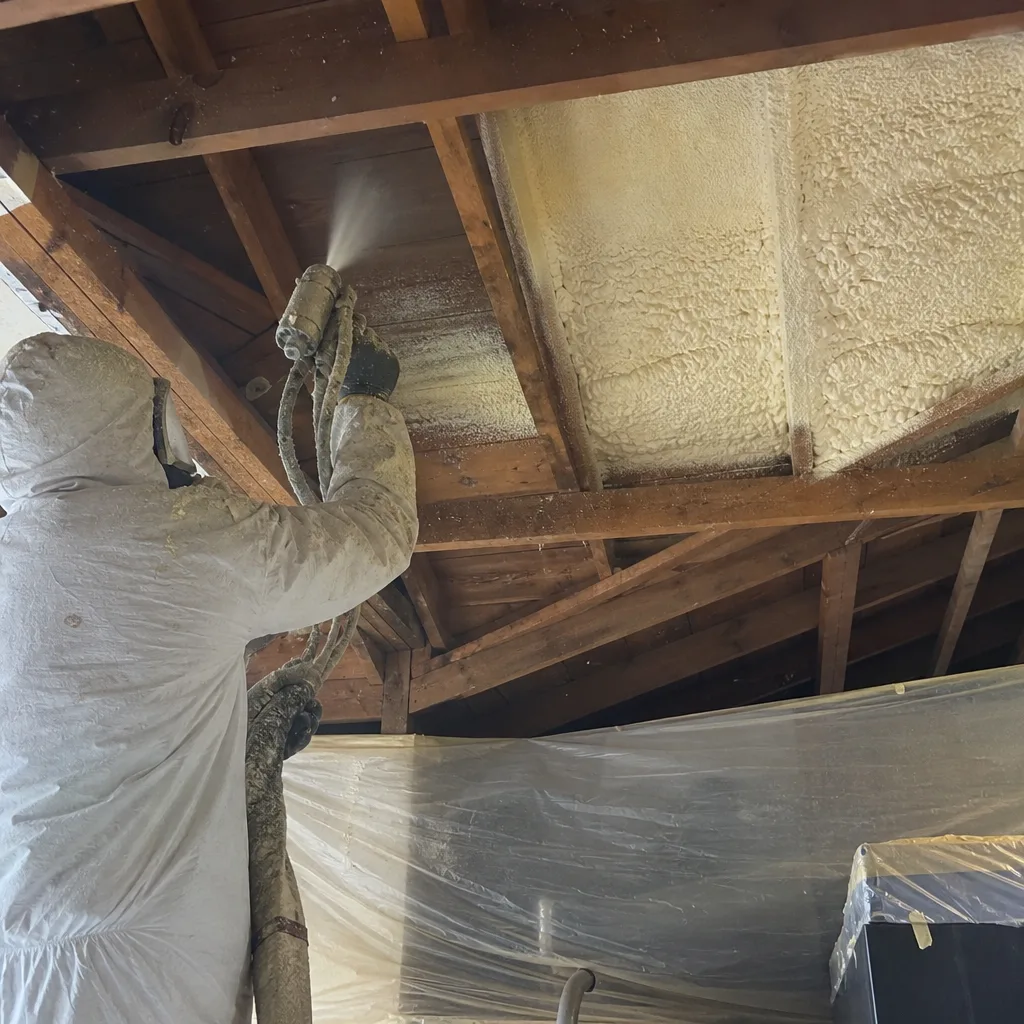
Attic Cleaning Services in Tulare are not a cosmetic extra. In this city, dust from surrounding farmland, wildfire ash from increasingly smoky summers, and decades of rodent activity in older ranch homes all accumulate in attics and settle into loose-fill insulation. That debris compresses the insulation, cuts its R-value, and gets pulled into your living space through bypasses and gaps. Cleaning is the first step before any meaningful re-insulation on older homes, and skipping it means blowing new material over a degraded, contaminated base.
A thorough attic cleaning for a typical Tulare ranch home runs between $800 and $1,800, depending on attic size and how much contaminated material needs removal. That includes removing old loose-fill or degraded batts, vacuuming, sanitizing, and preparing the attic for fresh insulation. We write the exact price down before we begin.
When Cleaning Must Come Before Insulation
If your 1960s fiberglass batts have slumped from the rafters and turned dark with trapped dust, cleaning isn’t optional. Blowing new cellulose over the top just buries the problem. We’ve removed batts from east-side Tulare homes that crumbled in our hands from heat degradation and years of agricultural dust. That material isn’t insulating anything. It needs to come out, the attic needs to breathe, and then new insulation goes in at the correct R-value for our climate zone.
Air Quality and Farm Proximity
Tulare sits in the middle of one of the most productive agricultural regions in the country, and that means particulate matter sifts into attics year-round. For homeowners with allergies or asthma especially those living near the dairy and field operations east and south of town cleaning the attic and air-sealing bypasses can produce a noticeable improvement in indoor air quality within days. It’s not a filter upgrade. It’s removing the reservoir of dust that’s been sitting above your ceiling for decades.
What happens when you call
- 1
A real person answersNo phone trees - you reach a local pro.
- 2
You get an upfront price rangeHonest numbers before anyone is dispatched.
- 3
A background-checked tech heads outLicensed & insured, dispatched right away.
- 4
You approve before work beginsNothing starts until you say go.
Trusted Brands We Service in Tulare
We install and service material from Owens Corning, Johns Manville, and Rockwool, along with our full Attic Insulation lineup, because the right material for a 1962 Tulare ranch isn’t necessarily the right material for a 2005 subdivision home. We keep common materials stocked for fast turnaround in Tulare, so a slump-failure repair on an east-side block doesn’t wait two weeks for a special order. Wool was the first insulation. Woolsey keeps the idea in the name, and we stand behind every material we install with the Kingswell Guarantee: a written price before work starts, a clean job site, and a written guarantee for 365 days on every job.
Common Attic Insulation Problems We See in Tulare Homes
- Slumped or fallen batt insulation. Heat-degraded 1960s fiberglass batts lose their friction fit and fall from rafter bays, leaving bare spots over bedrooms. On Tulare’s older east-side blocks, this is one of the most common failure patterns we see, and it’s why some rooms hit 90+ degrees by mid-afternoon even with the AC running.
- Compacted loose-fill from agricultural dust. Years of dust and ash settle into blown insulation, compressing it and cutting its R-value by half or more. The insulation looks present but isn’t doing its job, and homeowners usually notice a slow creep upward in summer energy bills.
- No attic ventilation strategy. Many 1950s-1970s Tulare ranches have gable vents or nothing at all. Without ridge and soffit ventilation, attic heat has nowhere to go, and the insulation becomes a heat sink that radiates down into the house for hours after sunset.
- Bypasses and gaps around framing. Where interior walls meet the attic, gaps let conditioned air escape and dusty attic air leak into the living space. In homes near farmland, this is also the pathway for agricultural particulate to enter the home.
Pricing for Attic Insulation in Tulare, CA
A typical attic insulation top-up for a 1,200-1,500 square foot Tulare ranch runs between $1,500 and $2,800. Full attic insulation replacement with old material removal and new blown-in cellulose to R-38 typically runs $3,500 to $6,000. Radiant barrier installations run $1,200 to $2,800. Attic cleaning alone falls between $800 and $1,800. These are honest ranges for this market, not bait numbers. What shifts the final figure is attic size, access difficulty (some older Tulare homes have tight scuttle holes), existing insulation condition, and whether air sealing is part of the scope. We’ll give you the exact written number before any work begins. Call (559) 785-2658 for a free estimate.
We Also Serve Cities Near Tulare
Woolsey Insulation Fresno serves the broader Central Valley region around Tulare, including Attic Insulation in Tulare plus Visalia, Kingsburg, Reedley, and Selma. Our crews schedule locally, which means residents throughout the area get the same written pricing and 365-day guarantee. If you’re a few minutes up the 99 or out toward the fields, we’re already working nearby.
Serving Tulare, CA - Our Local Coverage Area
We’re based in the Tulare area and know this community well. Use the map below to see our service coverage - if you’re nearby, we can almost certainly help.
FAQs About Attic Insulation in Tulare
Heat is the culprit. Tulare’s repeated triple-digit summers expose attic fiberglass batts to extreme temperatures, and over decades the resin binder that holds the fibers together degrades. The batts lose their stiffness, slump, and eventually fall out of the rafter bays. Once they fall, they insulate nothing, and the bedrooms below start absorbing heat directly through the ceiling. We remove the failed batts and replace them with blown-in cellulose, which doesn’t rely on a friction fit. For an exact quote on your attic, call (559) 785-2658.
Yes, with a caveat. A radiant barrier reflects heat, but dust and smoke particles settle on any attic surface, including the reflective foil face. In farm-adjacent parts of Tulare, the barrier may need periodic inspection and cleaning to maintain reflectivity. We account for this during installation and can recommend a maintenance schedule based on your location relative to field operations. Call us for a free evaluation.
R-38 is the practical minimum for attics in Tulare. Many older ranches have R-11 to R-19 or effectively nothing once batts have slumped. R-38 keeps the ceiling surface from becoming a heat emitter on afternoons when the outside temperature exceeds 100°F. Some homeowners in west-facing ranches with no shade go to R-49, and we’ll walk you through whether that’s worth it for your specific home. Call (559) 785-2658 for an assessment.
Old attic insulation acts like a dust reservoir. Agricultural particulate, wildfire ash, and decades of fine dust settle into loose-fill and batts. Through bypasses and gaps around ceiling fixtures, that material finds its way into your living space. Replacing contaminated insulation and air-sealing the attic floor reduces the amount of particulate entering the home. It’s one of the most noticeable quality-of-life improvements for homeowners near active farmland.
Because the insulation has likely slumped or failed in the rafter bays directly above those rooms. On older east-side blocks, the sun beats on the roof all morning and afternoon, the attic temperature climbs, and any bare spot in the insulation becomes a heat pathway straight into the bedroom. We’ve measured 94°F in a master bedroom by 3 p.m. on a home where the living room stayed comfortable. The fix is targeted: remove failed batts, seal the bypasses, and blow in cellulose to full depth. Call (559) 785-2658 and we’ll find the bare spots.
Written by Glenn Hartley, Owner at Woolsey Insulation Fresno, serving Tulare and the Central Valley with attic insulation and spray foam since 2002.